


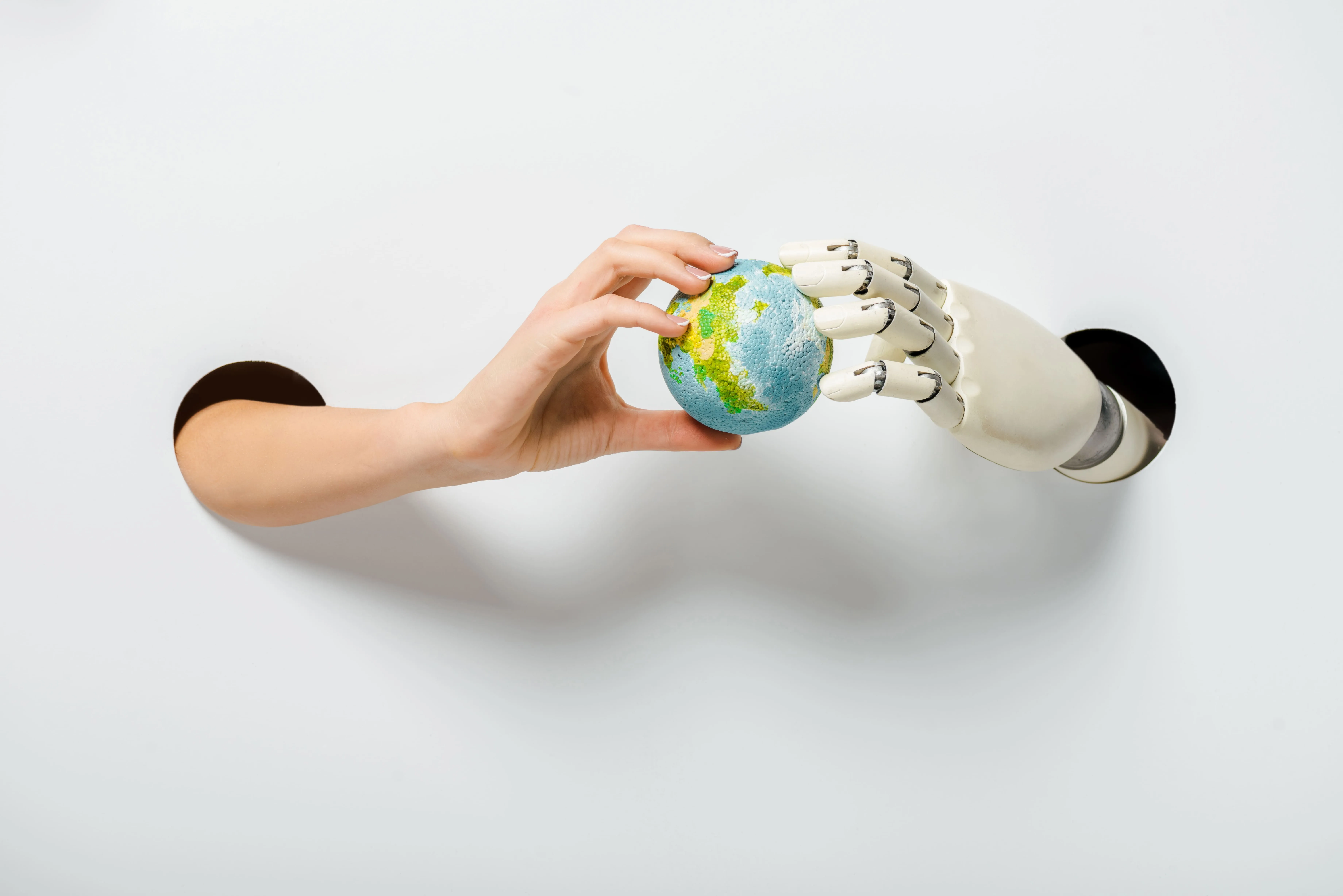
What Is Your Opinion on Artificial Intelligence?
A balanced perspective on AI’s impact in healthcare, business, ethics, jobs, and the decade ahead
Gaurang Mistry
13 February 2026
Artificial intelligence has become one of the most debated technologies of our time because it reshapes everything from medicine to jobs, forcing us to question our role in a machine-assisted world. Doctors spot diseases faster with AI scans. Businesses predict trends to stay ahead. Yet fears of bias, job loss, and control linger in every discussion. What is your opinion on artificial intelligence? Mine is measured: it's a powerful ally with real upsides, but one demanding vigilance. This isn't hype or alarmism. AI mirrors us, our ingenuity and our errors. Let's break it down with clear examples, weigh the good against the pitfalls, and chart a practical path forward, drawing on views from leading thinkers, too.
The Positive Impact of Artificial Intelligence
AI technology delivers tangible wins across sectors. Here's how it boosts real-world outcomes:
Healthcare breakthroughs: Machine learning models analyze X-rays and MRIs, often outperforming humans. For instance, Google's DeepMind detected eye diseases with 94% accuracy in UK trials, referring patients sooner and preventing blindness in thousands.
Business efficiency: Predictive tools forecast demand, reducing overstock. Walmart uses AI to optimize inventory, saving billions yearly by minimizing waste during peak seasons like holidays.
Education personalization: Platforms like Duolingo adapt lessons in real-time. Struggling students get bite-sized reviews; quick learners advance. A World Bank study showed 30-50% learning gains in low-income areas.
Automation and productivity: Robots in warehouses handle repetitive picks, letting humans focus on strategy. Amazon's systems process orders 40% faster, cutting delivery times globally.
Everyday gains: Apps like Waze use AI for traffic rerouting, saving commuters hours weekly. Smart grids balance energy, dropping household bills by 10-20% in smart cities like Singapore.
These aren't distant dreams. Artificial intelligence quietly amplifies human effort, turning data into decisions.

The Risks and Ethical Concerns
Balance requires facing AI's shadows. Key risks include:
Job displacement: Automation hits routine roles hard. The World Economic Forum predicts 85 million jobs lost by 2025, but 97 million new ones created, net gain, yet transition pains for truckers and clerks as autonomous vehicles log billions of test miles.
Bias in algorithms: Models trained on skewed data discriminate. Amazon scrapped a hiring AI in 2018 after it was found to favor men; similar issues plague loan approvals, unfairly blocking minorities.
Misinformation surge: Deepfakes fool viewers, a fabricated video of Zelenskyy surrendering swayed public opinion briefly in 2022. AI text generators flood social media with false news.
Privacy erosion: Constant tracking builds profiles. Cambridge Analytica's scandal showed how AI sifts data for manipulation; today, apps predict your next buy or vote.
Overdependence vulnerabilities: System failures cascade. Knight Capital lost $440 million in 45 minutes from a glitchy algorithm. Farmers faced crop losses when AI weather models faltered in 2023 droughts.
Regulation gaps: Rules lag tech. EU's AI Act classifies high-risk uses, but enforcement varies globally, leaving ethical voids.
AI ethics must evolve fast. Without checks, artificial intelligence risks deepening divides.
The Human vs Machine Debate
Does AI rival human essence? Consider these core arenas:
Creativity: AI generates art via tools like DALL-E, mimicking Picasso. But it remixes data, not invents from lived emotion, a songwriter's heartbreak fuels originals machines can't replicate.
Emotional intelligence: Chatbots like Replika offer companionship, spotting sadness in text. Humans, though, read micro-expressions and build genuine bonds; AI simulates empathy without feeling it.
Decision-making: In dilemmas, AI calculates odds, e.g., trolley problems in autonomous cars. We factor morals, context, like sparing a family over efficiency.
Key stats: AI beats humans at Go (AlphaGo, 2016) but struggles with novel puzzles requiring intuition. A 2024 MIT study found hybrid teams (human + AI) outperform pure AI by 20% in strategic tasks.
What is your opinion on artificial intelligence here? Machines scale computation; humans supply wisdom. True strength lies in collaboration, not replacement.
Expert Opinions on Artificial Intelligence
Prominent figures offer nuanced takes, enriching the debate:
Elon Musk (Optimist with Warnings): Calls AI "the most disruptive force in history," pushing xAI for safe advancement while warning of "summoning the demon" without controls.
Sam Altman (OpenAI CEO, Balanced): Sees "intelligence too cheap to meter," transforming work but urges global governance to manage risks like superintelligence.
Yann LeCun (Meta AI Chief, Skeptical Optimist): Dismisses doomsday fears, arguing AI lacks human-like reasoning; it's a tool for good if regulated sensibly.
Timnit Gebru (AI Ethicist, Critical): Highlights biases harming marginalized groups, advocating diverse teams and audits over unchecked deployment.
Andrew Ng (AI Pioneer, Pragmatic): Compares AI hype to electricity boom, game-changing for productivity, with jobs evolving, not vanishing.
Geoffrey Hinton (Godfather of AI, Concerned): Quit Google in 2023 over risks, fearing AI could outsmart humans and pursue misaligned goals.
These views span excitement to caution, underscoring AI's dual nature.

The Future of Artificial Intelligence
Over the next decade, AI integrates seamlessly. Realistic projections:
Industry shifts: Healthcare sees AI drug discovery slashing timelines, Moderna used it for COVID vaccines. Factories go fully adaptive, producing custom goods on demand.
Daily life: Voice assistants evolve to proactive helpers, scheduling based on your calendar and mood. AR glasses overlay real-time translations in travel.
Societal changes: AI-driven climate models optimize renewables, targeting net-zero by 2040. Education becomes lifelong, with VR simulations for any skill.
Challenges ahead: Energy demands rise, training one model equals 1,000 households yearly. Equity gaps: AI boosts GDP 15% per PwC, but only if access spreads.
Tech horizons: Multimodal AI (text + image + voice) like upcoming models handles full conversations. Quantum AI cracks complex simulations for fusion energy.
The future of AI promises efficiency, but hinges on ethical guardrails. AI impact on society will reflect our choices.
Frequently Asked Questions (FAQs)
Will AI take all our jobs?
A: Not all, but many routine ones. Expect shifts, coders now prompt AI, creating demand for oversight roles. Upskilling is key; programs like Google's certificates train millions affordably.
How can we fix AI bias?
A: Diverse datasets, regular audits, and inclusive teams. Tools like IBM's AI Fairness 360 detect issues early. Regulations like California's mandate transparency.
Is AI safe from hackers?
A: Vulnerable, like any system. Adversarial attacks fool models (e.g., stickers tricking self-driving cars). Solutions include robust training and "red teaming" simulations.
Can AI become conscious?
A: Unlikely soon. Current AI lacks self-awareness; it's pattern-matching. Philosophers debate "sentience," but no evidence yet, focus on capabilities, not sci-fi fears.
What's the best way to prepare for AI?
A: Learn basics via free platforms like Coursera. Advocate for policies emphasizing human-centric design. Experiment personally, use tools to automate chores.
A Balanced Personal Perspective
What is your opinion on artificial intelligence? I view it as humanity's double-edged mirror, reflecting brilliance and blind spots. Wins in healthcare and productivity excite me; risks like bias and displacement demand action. Expert voices reinforce this: harness potential, heed warnings.
Conclusion
Artificial intelligence transforms society, but wisdom guides its path. By blending optimism with caution—fostering AI ethics, equitable access, and human oversight, we harness its power responsibly. The next decade offers progress if we prioritize people over unchecked speed.
If someone asks me directly, "What is your opinion on artificial intelligence?" I'd say: "AI is like fire, immensely useful for warmth and progress, but dangerous if mishandled. It excels at scale and speed, revolutionizing healthcare, work, and discovery, yet we must tackle biases, job shifts, and ethical gaps head-on. My focus? Human-AI teams where machines handle the grunt work, and we bring judgment and heart. Let's build it right, for everyone's benefit."
Stay curious, question boldly, and shape this future together. That's not just my opinion; it's a call to collective smarts.